Showing posts with label Jane Eyre. Show all posts

Monday, December 17, 2012

Back to the Meme

I've been skipping my homework lately. I was too sad to post on Friday, and I suppose that sadness lingered over the weekend. Still, it is time to take back life and hug it a little closer, to embrace family and friends. These are the most important of all.

Today's assignment is "Your favorite quote from your favorite book." Are you sick of Jane Eyre yet? Because that is my favorite. And I love this quote:

“Do you think I am an automaton? — a machine without feelings? and can bear to have my morsel of bread snatched from my lips, and my drop of living water dashed from my cup? Do you think, because I am poor, obscure, plain, and little, I am soulless and heartless? You think wrong! — I have as much soul as you — and full as much heart! And if God had gifted me with some beauty and much wealth, I should have made it as hard for you to leave me, as it is now for me to leave you. I am not talking to you now through the medium of custom, conventionalities, nor even of mortal flesh: it is my spirit that addresses your spirit; just as if both had passed through the grave, and we stood at God's feet, equal — as we are!” 

In this passage, the passion and spirit inside Jane's pale, obedient body bubbles up as she confronts Mr. Rochester. I love that a woman speaks so to a male, and to a "superior" - no humility here. This fairly sings with freedom and pride, and to my mind, it is remarkable that a schoolteacher on a Yorkshire moor should write it.

As for my Indie book, I have to go back to The Prospect of My Arrival again. It's difficult to choose one quote, but I really fell in love with the jellyfish:
Dwight Okita, the author


"He and his mother now stand before the Aquarium windows. As they leave this place, jellyfish descend in slow motion like parachutes onto the bright coral reefs below them. Prospect thinks of the parachutes that people cling to as they drop from the sky. How a good parachute can save your life… and how a bad one is like having no parachute at all. "

The writing is very simple, and in fact Prospect received several poor reviews because of that simplicity. To me, however, the sentences were lovely and nearly glowed with artistry, as in this short section. 

I wonder what Prospect would have thought of the events of Friday.


Sunday, December 2, 2012

The Great Re-Reader

Posted for the 30 Days of Books blogfest, courtesy of The Indie Exchange)

Today's subject is : A book that you have read more than three times.

Aha! I have the answer at my fingertips : Jane Eyre. I've read that book so many times that I've gone through five copies now. My husband, when he catches me in the middle of it again, says, "Not that Janet Eerie again." (Shocker, he hasn't read it.)


I love her, because she refuses to drown in a "bathos of sentiment" with Mr. Rochester. Bathos is the perfect word here - a different woman would melt instantly into his arms, but Jane will have none of it.

YOU GO GIRL

I first read the book when I was in fifth grade. At the time, I sucked it down for the adventure and the story, as well as the descriptions of parties and beautiful dresses. Later, the quotes about bathos and deglutition hit me, so that reading the book became an entirely different experience. Jane herself emerged, like those tea flowers that open slowly in warm water.

Yup, I love Jane, and here's why:

Because she was so mystical. She had prophetic dreams, she drew elves and the North Star, she saw a ghost in the Red Room. 

Because she felt excitement, even in the middle of a most hopeless situation. "The crisis was perilous; but not without its charm: such as the Indian, perhaps, feels when he slips over the rapid in his canoe."

Because, even when faced with a beautiful rival who is rich and favored, Jane sees the truth. "She could not charm him."

And then there is this passage, that formed an important section in A Room of One's Own, by Virgina Woolf:


"Nobody knows how many rebellions besides political rebellions ferment in the masses of life which people earth.  Women are supposed to be very calm generally: but women feel just as men feel; they need exercise for their faculties, and a field for their efforts, as much as their brothers do; they suffer from too rigid a restraint, too absolute a stagnation, precisely as men would suffer; and it is narrow-minded in their more privileged fellow-creatures to say that they ought to confine themselves to making puddings and knitting stockings, to playing on the piano and embroidering bags."

So I will read Jane Eyre (and her difficult, more dramatic cousin, Wuthering Heights) again to find the new delights that keep popping up, like a search through an old attic. There are many, many books I've read again and again - The Hobbit and Mistress Masham's Repose among them, but this is my favorite.

As for my Indie counterpart, I immediately thought of Sax and the Suburb by Marilyn Rucker, which recently won a BRAG medallion. You can read my complete review here. I'm not a mystery fan, but Rucker charmed me right away with her humor, her characters (the father who is a hoarder, the boss who falls asleep on the floor in the office, and even the dead mother) and the lovely little romance within. 

Are there any similarities between the two books? Not at all, at first glance. One is a mystery set in Texas, the other is a 19th century literary romance. Yet there is a certain charm and magic in both. In Rucker's book,  Miranda, the main character, dreams about her dead mother who takes her heart out of her chest and offers it to Miranda. That sounds ghoulish, but in the dream it is a cute heart-shaped box of candy. 

I love that image, and Rucker makes it work. I'll read that book again too.

Reading is great, and sometimes re-reading is better. I heartily recommend these titles for both.


Tuesday, October 9, 2012

A Guilty Pleasure

It's been a bit dreary here, weatherwise, for the past few days. The sound of the wind and rain made me long for a mashed potato book, a book that would comfort my soul and whisk me away.

And so I started in on Friday's Child, a book by Georgette Heyer. I've written about her before, here. 

This was a doubly guilty pleasure because 1) the book is a frilly romance and 2) I was rereading it. Personally, I consider Georgette's books much more than frilly romance, since she had a complete grasp of the Napoleonic wars, 19th century farming, London society, smuggling, and Georgian fashion.

Be that as it may, I was tucked up in bed, giggling away at Hero Wantage and her escapades with Sherry, Gil, and Ferdy. After a particularly loud snort, my husband wandered in. "What are you doing?" he demanded.

"Reading," I replied.

"You already read that book," he pointed out.

"Rereading," I amended.

He shook his head. "I don't get how you can do that."

He's always on me about reading books more than once. We were at the beach, and he asked me, "Are you really reading that Janet Eerie again?" (Reader, it was Jane Eyre.)

Honestly, each time I've read Jane, I find something new. I loved this passage, which I had somehow missed before:
My favorite onscreen adaption.

"I saw that in another moment, and with one impetus of frenzy more, I should be able to do nothing with him. The present--the passing second of time--was all I had in which to control and restrain him: a movement of repulsion, flight, fear, would have sealed my doom,-- and his. But I was not afraid: not in the least. I felt an inward power; a sense of influence, which supported me. The crisis was perilous; but not without its charm: such as the Indian, perhaps, feels when he slips over the rapid in his canoe."

Now, Friday's Child is no Jane Eyre, but the novel was perfect for my mood. So I indulged in that guilty pleasure, a total time waste, a moment of zen, when I slipped away from the world of 2012, hand in hand with some every old companions.

Monday, July 23, 2012

The Sixth Dimension

There are some writers who can make things come alive in their books. Their style has a compelling quality, a gravitational pull that keeps the reader glued to the book past her bedtime. "Just one more chapter," she thinks, turning the page and ignoring the clock.


One thing that makes that style fascinating is an awareness of the sixth dimension. The worlds those writers create aren't just filled with exciting action and adventure and romance. Those little, spinning planets have color and depth. They are alive.


My go-to book as an example of this is Jane Eyre. The settings in the book: Gateshead, Lowood, Moor House, and of course, Thornefield are real places. I can picture the Red Room, the attics, and the sick room where Helen Burns died.


But more than that, I can taste the burnt porridge, smell the smoke from the fire in the night, feel the worn flagstones under my feet, hear that eerie Ha Ha! from the madwoman in the attic.


Mervyn Peake is another writer who makes his books come alive, almost too much so. His Gormenghast is filled with color and amazement, as in the Flint Tower, the red, close set eyes of Steerpike, and the sullen, ugly-beautiful Fuschia.
Gormenghast Castle


It is vital, then, to create a world for readers that has color, smell, taste, touch, and sound. Slice the apple, hear the thump of the knife in the cutting board, smell the white flesh, taste the tart fruit. 


And there is another element. Those sights and sounds must support a central story, whether it is romance or adventure or both. The velvet under our fingers, the woodsmoke in our hair, the train whistle disappearing in the distance, all must advance the sixth sense - that what was not real before is now alive.

Tuesday, August 2, 2011

The End (Spoiler alert!)

After finally finishing The Lamplighter's Special, my sequel to The Night Watchman Express, I've learned one thing: Endings are hard to do. It is a very difficult, complicated thing to increase suspense and interest  in a group of characters, and arrive at a conclusion that is either happy or sad, in a way that balances the beginning and the middle of the book.

Seriously, I'm just realizing this. You'd think it would be obvious. Miss Writer starts her book, develops a plot, and therefore she must find a satisfactory way to end that book. However, I don't think I'm all alone in having this difficulty. I heard, for example, a lot of people criticize the final book of the Twilight series.  Ditto with the Harry Potter series. (For the  record, I rather like the chapter that begins, "Nineteen Years Later....") Stephen King is well-known for having a hard time with endings; his son, in Heart Shaped Box, seemed to have inherited the tendency.*

There must be some good endings  out  there, though. and by good, I mean well-done, finely executed. Here are some of my favorites:

1. The Shawshank Redemption - The scene of Red walking across the beach to see Andy Dufresne still gives me chills. The credits roll, and I like to imagine what  happened next. Did the men hang out, go to a little Mexican place and have some food and a few "Bohemia style beers?" Did Andy introduce Red to a nice woman who lived nearby? Did they settle down there at Zihuatenejo? I like to think they did.


2. Apollo 13 - That last  line of the  narration is incredible. "I sometimes catch myself looking up at the Moon, remembering the changes of fortune in our long voyage, thinking of the thousands of people who worked to bring the three of us home. I look up at the Moon and wonder, when will we be going back, and who will that be?"


3. The Road - I didn't see the movie. The last paragraph of the book, however, describing the beauty of river trout, is pure horror. 

4. Frequency - This movie won't win any lifetime awards, I suppose, but my husband actually stood up and cheered (in our family room, not a theater) at the end.


5. "Reader, I married  him..." But of  course.

What endings  to movies or books (or songs, or poems, or anything) have you enjoyed? Please share them in the comment section, because I'm still working on that ending thing.

*Do go and read Heart Shaped Box, though.  It scared the bejeesus out of me.

Wednesday, June 29, 2011

The Greatest Books I'll Never Read Again

Some novels are crafted so wonderfully that I want to read them more than once. Plainsong by Kent Haruf is one of these - the style is spare and lyrical at the same time. Plus, the way Haruf creates a strange little family from such an ill-assorted crew of characters is breath-taking. Jane Eyre is another, simply because I love Jane so much. Born plain and penniless, she is still one of the strongest women in fiction. 


There are some books, however, that are incredible and wonderful and yet I will never reread them. These are the top three of that list:


1.The Road, by Cormac McCarthy - When I started reading this book, everything else disappeared. I got sucked into the story of the man and the boy traveling across the face of a strange, post Apocalyptic America with only a shopping cart, and I had to find out what happened to them. Of course, what does occur is dreadful - McCarthy offers no comfort in his work, as anyone who read No Country for Old Men knows. As the boy keeps saying, there are some things you can't unsee.


2. A Thousand Splendid Suns by Khaled Hosseini - I finished this novel at three in the morning because I just couldn't stop reading. Even though it was so late, I had to go and see my daughter and give her sleeping face a big kiss after reading Suns. I wouldn't call this a classic; it's not in the same category as The Road or Plainsong, but it's very good fiction nonetheless. Hosseini is famous for The Kite Runner - also addictive reading - but I much preferred this book. The dream scene where Laila buries her daughter alive is vivid and shocking. It's why I had to go and kiss that face.


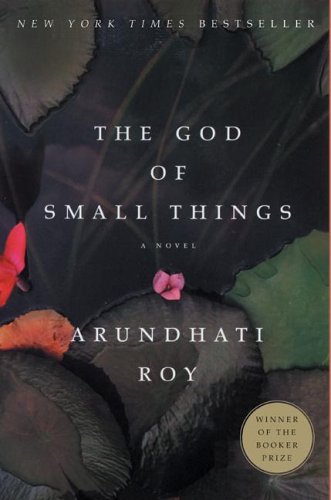
3. My friend just lent me The God of Small Things, and I read it in a few days. After I finished it, I was in despair - hack writer that I am, I will never, ever, be able to write like that. Arundhati Roy reinvents the way a story can be told, turning it inside out like a Moebius strip, with beautifully reoccurring images (the time "ten to two" comes to mind) and an ending that breathes horror and beauty in one word. And it is dreadful, too - what the Orangedrink Lemondrink man does to little Estha is terrible - and then it gets far, far worse. 


It takes courage, I think, to write books as terrible and wonderful as these - it's much easier to write simple, fun little stories like mine. My books might be pulp fiction (and I'm okay with that) but I can still appreciate works of pure artistry and genius, unsettling as they are.