Some books, alas, make readers teary. Anne of Green Gables had a great riff on this; the red-headed orphan's saddest story was called "My Graves."
But in the real world some fiction is so gritty and realistic, or so poignant that it brings me to the point of Mush when I read it. After the last page of A Thousand Splendid Suns, for example, I had to go and hug my four-year old daughter. HAD TO. By the way, it was two in the morning, since the book was so good I couldn't stop reading. Couldn't stop sniffling, either. Mush Factor - 3 out of 5.
Another was The Road. This dystopian chiller is beautifully written. It was a compelling read - I had to find out what happened. The last few paragraphs are the most lyrical, and they are also the saddest. I have never seen the movie, and I don't know if I want to - the book was bad enough. Mush Factor - 4 out of 5.
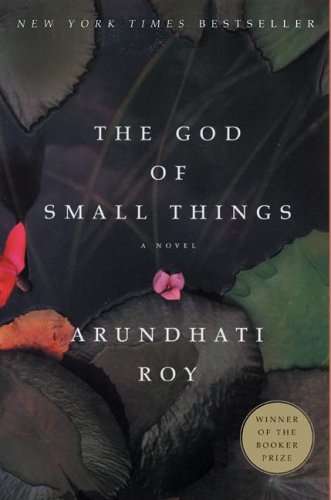
But the saddest book I've read yet was The God of Small Things, which earns a perfect 5 out of 5 Mush Factor points. What happens is so bad, for so many people, and yet again - the language and descriptions are really lovely and lyrical, and I could not put it down.
So I suppose the last is my true choice for a book that makes me sad. I call the three books above "The greatest books I'll never read again."
As for my Indie choice, I'd have to pick Losing Beauty. What happens is certainly sad, although again it has that compelling factor that drove me to my Kindle in the wee hours to read "only a few more pages." And the writing is lovely - and there is a bit more hope in this one than in the others.
If you enjoy a good, sniffly read, I'd certainly recommend any of the above. But if you want at thehint of possible happiness, I'd offer the last.
Showing posts with label The Road. Show all posts
Thursday, December 6, 2012
Tuesday, August 2, 2011
The End (Spoiler alert!)
After finally finishing The Lamplighter's Special, my sequel to The Night Watchman Express, I've learned one thing: Endings are hard to do. It is a very difficult, complicated thing to increase suspense and interest in a group of characters, and arrive at a conclusion that is either happy or sad, in a way that balances the beginning and the middle of the book.
Seriously, I'm just realizing this. You'd think it would be obvious. Miss Writer starts her book, develops a plot, and therefore she must find a satisfactory way to end that book. However, I don't think I'm all alone in having this difficulty. I heard, for example, a lot of people criticize the final book of the Twilight series. Ditto with the Harry Potter series. (For the record, I rather like the chapter that begins, "Nineteen Years Later....") Stephen King is well-known for having a hard time with endings; his son, in Heart Shaped Box, seemed to have inherited the tendency.*
There must be some good endings out there, though. and by good, I mean well-done, finely executed. Here are some of my favorites:
1. The Shawshank Redemption - The scene of Red walking across the beach to see Andy Dufresne still gives me chills. The credits roll, and I like to imagine what happened next. Did the men hang out, go to a little Mexican place and have some food and a few "Bohemia style beers?" Did Andy introduce Red to a nice woman who lived nearby? Did they settle down there at Zihuatenejo? I like to think they did.
2. Apollo 13 - That last line of the narration is incredible. "I sometimes catch myself looking up at the Moon, remembering the changes of fortune in our long voyage, thinking of the thousands of people who worked to bring the three of us home. I look up at the Moon and wonder, when will we be going back, and who will that be?"
3. The Road - I didn't see the movie. The last paragraph of the book, however, describing the beauty of river trout, is pure horror.
4. Frequency - This movie won't win any lifetime awards, I suppose, but my husband actually stood up and cheered (in our family room, not a theater) at the end.
5. "Reader, I married him..." But of course.
What endings to movies or books (or songs, or poems, or anything) have you enjoyed? Please share them in the comment section, because I'm still working on that ending thing.
*Do go and read Heart Shaped Box, though. It scared the bejeesus out of me.
Wednesday, June 29, 2011
The Greatest Books I'll Never Read Again
Some novels are crafted so wonderfully that I want to read them more than once. Plainsong by Kent Haruf is one of these - the style is spare and lyrical at the same time. Plus, the way Haruf creates a strange little family from such an ill-assorted crew of characters is breath-taking. Jane Eyre is another, simply because I love Jane so much. Born plain and penniless, she is still one of the strongest women in fiction.
There are some books, however, that are incredible and wonderful and yet I will never reread them. These are the top three of that list:
1.The Road, by Cormac McCarthy - When I started reading this book, everything else disappeared. I got sucked into the story of the man and the boy traveling across the face of a strange, post Apocalyptic America with only a shopping cart, and I had to find out what happened to them. Of course, what does occur is dreadful - McCarthy offers no comfort in his work, as anyone who read No Country for Old Men knows. As the boy keeps saying, there are some things you can't unsee.
2. A Thousand Splendid Suns by Khaled Hosseini - I finished this novel at three in the morning because I just couldn't stop reading. Even though it was so late, I had to go and see my daughter and give her sleeping face a big kiss after reading Suns. I wouldn't call this a classic; it's not in the same category as The Road or Plainsong, but it's very good fiction nonetheless. Hosseini is famous for The Kite Runner - also addictive reading - but I much preferred this book. The dream scene where Laila buries her daughter alive is vivid and shocking. It's why I had to go and kiss that face.
3. My friend just lent me The God of Small Things, and I read it in a few days. After I finished it, I was in despair - hack writer that I am, I will never, ever, be able to write like that. Arundhati Roy reinvents the way a story can be told, turning it inside out like a Moebius strip, with beautifully reoccurring images (the time "ten to two" comes to mind) and an ending that breathes horror and beauty in one word. And it is dreadful, too - what the Orangedrink Lemondrink man does to little Estha is terrible - and then it gets far, far worse.
It takes courage, I think, to write books as terrible and wonderful as these - it's much easier to write simple, fun little stories like mine. My books might be pulp fiction (and I'm okay with that) but I can still appreciate works of pure artistry and genius, unsettling as they are.
There are some books, however, that are incredible and wonderful and yet I will never reread them. These are the top three of that list:
1.The Road, by Cormac McCarthy - When I started reading this book, everything else disappeared. I got sucked into the story of the man and the boy traveling across the face of a strange, post Apocalyptic America with only a shopping cart, and I had to find out what happened to them. Of course, what does occur is dreadful - McCarthy offers no comfort in his work, as anyone who read No Country for Old Men knows. As the boy keeps saying, there are some things you can't unsee.
2. A Thousand Splendid Suns by Khaled Hosseini - I finished this novel at three in the morning because I just couldn't stop reading. Even though it was so late, I had to go and see my daughter and give her sleeping face a big kiss after reading Suns. I wouldn't call this a classic; it's not in the same category as The Road or Plainsong, but it's very good fiction nonetheless. Hosseini is famous for The Kite Runner - also addictive reading - but I much preferred this book. The dream scene where Laila buries her daughter alive is vivid and shocking. It's why I had to go and kiss that face.
3. My friend just lent me The God of Small Things, and I read it in a few days. After I finished it, I was in despair - hack writer that I am, I will never, ever, be able to write like that. Arundhati Roy reinvents the way a story can be told, turning it inside out like a Moebius strip, with beautifully reoccurring images (the time "ten to two" comes to mind) and an ending that breathes horror and beauty in one word. And it is dreadful, too - what the Orangedrink Lemondrink man does to little Estha is terrible - and then it gets far, far worse.
It takes courage, I think, to write books as terrible and wonderful as these - it's much easier to write simple, fun little stories like mine. My books might be pulp fiction (and I'm okay with that) but I can still appreciate works of pure artistry and genius, unsettling as they are.
Subscribe to:
Comments (Atom)