Showing posts with label magic. Show all posts

Tuesday, June 4, 2013

Threads, by Erin Latimer

Threads is a compelling, fun read, perfect for the beach or poolside. It is light as whipped cream or champagne bubbles, and just as delightful.

Alice is a 20-something whose boyfriend has just broken up with her. She lives with her parents and is shy; she also considers herself as a mousy, plain girl. When she gets a letter stating she has inherited Threads, she goes to visit it.

The store seems to be a boring shop that sells vacuums, until (SPOLER ALERT)
.
.
.
.
.

...Alice discovers  the Threads in the title are actually threads of magic she can manipulate, and the store sells magical items. Not vacuums. Yay! 

She and her staff, an elder witch, a tiger, and an elf, work in the shop (which moves to different cities depending on its whims.) I'm not usually an Elf type of person, but Latimer makes Demetri and the other characters very real. Their conversations and interactions are delightfully effortless. I adored Shakra, the tiger, as well as the friendship between Alice and the Azura, the older witch who teaches the girl magic and how to run the store.
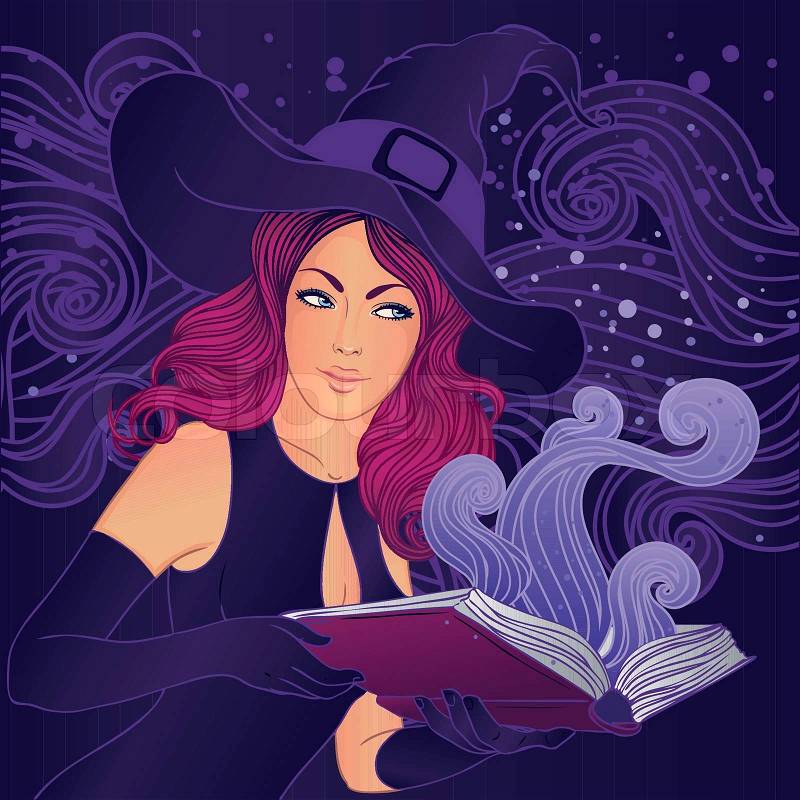
Image courtesy of colourbox.com

The first section sets the scene, and enter two very different, enticing men: Alexie Ambrose, the popstar of the magic world, and Altair, a thief. Both are dangerous and exciting, and their interactions bring a round of adventures, complete with pretty clothes, limos, and more champagne.

I do see the Kindle version, at least, is immature in its formats. Formatting an ebook is an art unto itself, and the paragraph indents double up throughout the book. (I agree in advance I'm being uber-picky, but it is distracting.)

However, for 99 cents - NINETY NINE CENTS!!!! - this is a great choice. Latimer's characterization overcomes the format issues (as well as a need for another edit) and make this a wonderful book for the summer, if you like magic and adventure, plus a bit of romance. 


What I liked:

Demetri (not usually an elf gal, as I said, but he is well done.)

Alice herself - great main character.

The cover - Gorgeous.

Alice's friendships - I'm always up for a book that showcases female friendships. Alas, they are hard to find!

Altair - The thief is wickedly handsome, and the sparks between him and Alice fly.

The price - Again, 99 cents! For a week's entertainment! Unheard of.

The world - Latimer's creation is real. I can picture the shop and the characters.


The length - Chapters and chapters of magical reading.

Readability - Is that a word? In any case, Threads has that "elusive compulsive factor" I'm always on about. Latimer's style is effortless and breezy, and her chapter endings kept me reading far past my bedtime.


What I didn't like:

All the "A" names. I got a bit confused between Alexie, Altair, and Azura.

The formatting - A simple redo of the indent tabs would really improve the reading experience.

The main storyline - Latimer deftly creates her own living, breathing world, but the plot gets a bit lost in the result. However, it's not a huge deal, since there is excitement throughout. Things certainly pick up in the second half of the book, but I felt as though the author had to shuttle the characters to Altair's mansion to really get things going. (As an author, I sympathize. Moving characters around is exhausting.) 

I must add here: I was never bored, and I give this book a solid four stars for pure delightful fun and value.

Friday, March 15, 2013

A Tale of Two Books - The Night Circus

I may have spent a longer amount of time reading The Night Circus by Erin Morgenstern than I did on the entire LOTR trilogy. The cover is gorgeous and I had read glowing reviews, so I excitedly picked it up in the bookstore. Alas, one glance showed me that it was written in present tense. I'm more of a past tense gal.

I put it back and later, when we were leaving for a journey, I loaded Night Circus on my Kindle. I began to read, and my eyes glazed over. This happened again and again.

It wasn't that Night is filled with bad writing - far from it. Morgenstern uses beautiful prose, words so lovely that some passages read like poetry. Look at this section:

“Someone needs to tell those tales. When the battles are fought and won and lost, when the pirates find their treasures and the dragons eat their foes for breakfast with a nice cup of Lapsang souchong, someone needs to tell their bits of overlapping narrative. There's magic in that. It's in the listener, and for each and every ear it will be different, and it will affect them in ways they can never predict. From the mundane to the profound. You may tell a tale that takes up residence in someone's soul, becomes their blood and self and purpose. That tale will move them and drive them and who knows what they might do because of it, because of your words. That is your role, your gift. Your sister may be able to see the future, but you yourself can shape it, boy. Do not forget that... there are many kinds of magic, after all.” 

And this:

“Stories have changed, my dear boy,” the man in the grey suit says, his voice almost imperceptibly sad. “There are no more battles between good and evil, no monsters to slay, no maidens in need of rescue. Most maidens are perfectly capable of rescuing themselves in my experience, at least the ones worth something, in any case....And is not the dragon the hero of his own story? Is not the wolf simply acting as a wolf should act?”

In the second selection, Morgenstern says, "Things keep overlapping and blur..." They do just that in this book, and luckily the chapter headings include dates to keep us on the right track. Both of the above selections are about story, however, and that's what kept tripping me up with the beginning 70% of Night Circus: there was no story. The language grew more and more gorgeous, so I was almost drunk with words, but at one point I had to stop and read The Stand just to have a book with a real villain, real body fluids, and characters who curse out each other. I needed a dose of filet steak after all that spun sugar.
image courtesy of deviant art

"Dessert consists mainly of a gargantuan tiered cake shaped to resemble circus tents and frosted in stripes, the filling within a bright shock of raspberry cream. There are also miniature chocolate leopards, and strawberries coated in looping patterns of dark and white chocolates." - The Night Circus


The characters all speak in the same, dreamy way, so I could hardly tell one from the other. What was the difference between Celia and Isobel, anyway? One does magic and the other reads cards and they both are attracted to Marco (who also speaks like both of them.)

At last I reached the final section of the book, and finally the story took hold. In the ending 30%, I wanted to keep reading - no longer was it a matter of slogging on through bogs of caramel and popcorn. At last, the competition between Celia and Marco became real and important. Moreover, the characters Poppet and Bailey took center stage, and they were vivid enough to catch my imagination and care about what happened to them, very much. I could envision a sequel about those two, in fact. 
image courtesy of guardian.co.uk

The Night Circus left me in a quandary. On one hand I loved Morgenstern's language and prowess with words - if the chapters had been presented as interwoven short stories, I might have enjoyed the first major portion of the novel more. On the other hand, the writing was so misty that I couldn't stand much more than a few pages at a time - even a scene where a woman walks in front of a train is told in the manner of a Degas painting. 

I have been told that Jim Dale narrates the audio version, and I think that might be the way to go with the book. Dale's own magic would instil the characters with their own voices, adding layers to the floating beauty of Morgenstern's poetry. Perhaps he could add a bit of irony to the conversations as well, so a comment like this: "I thought it might be easier if you doubted him. And I gave you a year to find a way for the circus to continue without you. You have not. I am stepping in..." might become more realistic, as well as the dreamy response. (If only Celia reacted by saying, "You know what? Go to hell.")

So this review is a tale of two books: the long beginning that I struggled through and the ending that gripped my attention and wouldn't let go.

Sunday, December 2, 2012

The Great Re-Reader

Posted for the 30 Days of Books blogfest, courtesy of The Indie Exchange)

Today's subject is : A book that you have read more than three times.

Aha! I have the answer at my fingertips : Jane Eyre. I've read that book so many times that I've gone through five copies now. My husband, when he catches me in the middle of it again, says, "Not that Janet Eerie again." (Shocker, he hasn't read it.)


I love her, because she refuses to drown in a "bathos of sentiment" with Mr. Rochester. Bathos is the perfect word here - a different woman would melt instantly into his arms, but Jane will have none of it.

YOU GO GIRL

I first read the book when I was in fifth grade. At the time, I sucked it down for the adventure and the story, as well as the descriptions of parties and beautiful dresses. Later, the quotes about bathos and deglutition hit me, so that reading the book became an entirely different experience. Jane herself emerged, like those tea flowers that open slowly in warm water.

Yup, I love Jane, and here's why:

Because she was so mystical. She had prophetic dreams, she drew elves and the North Star, she saw a ghost in the Red Room. 

Because she felt excitement, even in the middle of a most hopeless situation. "The crisis was perilous; but not without its charm: such as the Indian, perhaps, feels when he slips over the rapid in his canoe."

Because, even when faced with a beautiful rival who is rich and favored, Jane sees the truth. "She could not charm him."

And then there is this passage, that formed an important section in A Room of One's Own, by Virgina Woolf:


"Nobody knows how many rebellions besides political rebellions ferment in the masses of life which people earth.  Women are supposed to be very calm generally: but women feel just as men feel; they need exercise for their faculties, and a field for their efforts, as much as their brothers do; they suffer from too rigid a restraint, too absolute a stagnation, precisely as men would suffer; and it is narrow-minded in their more privileged fellow-creatures to say that they ought to confine themselves to making puddings and knitting stockings, to playing on the piano and embroidering bags."

So I will read Jane Eyre (and her difficult, more dramatic cousin, Wuthering Heights) again to find the new delights that keep popping up, like a search through an old attic. There are many, many books I've read again and again - The Hobbit and Mistress Masham's Repose among them, but this is my favorite.

As for my Indie counterpart, I immediately thought of Sax and the Suburb by Marilyn Rucker, which recently won a BRAG medallion. You can read my complete review here. I'm not a mystery fan, but Rucker charmed me right away with her humor, her characters (the father who is a hoarder, the boss who falls asleep on the floor in the office, and even the dead mother) and the lovely little romance within. 

Are there any similarities between the two books? Not at all, at first glance. One is a mystery set in Texas, the other is a 19th century literary romance. Yet there is a certain charm and magic in both. In Rucker's book,  Miranda, the main character, dreams about her dead mother who takes her heart out of her chest and offers it to Miranda. That sounds ghoulish, but in the dream it is a cute heart-shaped box of candy. 

I love that image, and Rucker makes it work. I'll read that book again too.

Reading is great, and sometimes re-reading is better. I heartily recommend these titles for both.


Friday, May 4, 2012

One Thing a Kindle Can't Do

The other day I had an online chat with a few of my favorite moms. We bemoaned the fact that our kids didn't read as much as we used to when we were kids, thus proving that yes, I am really old now.


I notice that my daughter does tend to read if - and this is very important - if I myself pick up a book in her presence. At the moment that book is Quicksilver by Neal Stephenson, so it is a damn heavy book to pick up.


As with swimming, and I bet with riding her bike at last, if Mom does it then Kid will, too. So I just have to learn to step away from the laptop and the iPad and the iPhone and the iPod and read, read, read. Those flipping pages seems to waft some magical gas in Kid's direction and before you know it, she is reading Missy, An Abandoned Kitten. She goes for books about cute animals, and yes, diabetics are not allowed to read that story. Or even look at the cover.


Here's the thing. If I were reading Quicksilver on my Kindle, which would be much more convenient and lighter, and I think it would relieve my back pain too, then my kid would not KNOW that I was reading. It would look like I was on just another device.


And, let's face it, a Kindle does more than showcase books. You can surf the Internet, play games... I had someone tell me that they use their Kindle for everything except books. I'm not judging, just saying.


As I and countless others have said, Kindles are great, but print rocks too. A print book does nothing but lie there and be a book. You can't text from it, set up a soundtrack or play Temple Run. And isn't that fantastic, in a minimalist sort of way? 


I love my Kindle (which I host on my iPad) but it can't smell like parchment and old leather. It can't make that riffling sound as I look for my place. It's techie and cool, but it's not magic. 


Yet.


Wednesday, September 7, 2011

Black Numbers

The author, Dean Lappi
 I'm lucky enough to have Dean Lappi, author of Black Numbers, writing a column for Fresh Pot of Tea today. Black Numbers is a hybrid, a book that is both fantasy and horror, and it's definitely not for the faint of heart. However, if you like exploring new possibilities and other dimensions, then it is a gripping read. The book takes hold and won't let you go; I still am haunted by some of the scenes in it.
You can buy the  book here. 
Dean's striking cover.

*****
The inspiration for my hybrid dark fantasy/horror novel BLACK NUMBERS hit me one day in a coffee shop. I sat on a comfy overstuffed chair next to a fireplace listening to people chatter all about me, and I had my laptop open in front of me. It is a setting that allows me to let my mind wander freely, and that is when the best ideas come to me. On this particular day, I had come to the coffee shop to do some free-writing, which is something I do just to see if something interesting comes from nothing.
As I let my mind wander, I thought of the fantasy genre, which has been my favorite genre since I was a little boy. I always lost myself in the fantastic stories by Tolkien, Donaldson, Anthony, Robertson, Kurtz; the list is very long of authors who took me to lands I never dreamed could exist. And as I sat in this coffee shop thinking about them, I closed my eyes and asked myself, what is the one thing all Fantasy novels seem to have in common?
Magic!
That one word appeared in my mind.
 
Magic is the binding energy that brings together every fantasy story. But as I sat in that huge overstuffed chair on that day, I suddenly thought, "What if magic could be explained mathematically. Wouldn't that be cool? What if a spell was actually a mathematical equation?"
The idea hit me almost as a physical blow. I sat back and visualized the character of Sid (his name popped into my head immediately) and how he could use advanced mathematics to create true magic.

I immediately started typing, and I wrote 2500 words without stopping once. Those words ultimately turned out to be Chapter 1 in Black Numbers, and those first words have not changed much even after the professional edits the book has received from Fantasy Island Book Publishing before it went to print.
I wrote the novel from that first chapter all the way to the end in just three months, with the story unfolding in my head as I typed. It was an amazing experience.
Now I am writing book two in the series, called Blood Numbers, and the story is growing, the world is expanding in my head, and I can't put the words down on paper quickly enough.
As authors, inspiration strikes us all in different ways, and it is the spark that ignites the flame of a story in our minds.
Mine just happened to be a mathematical flame.
Cheers!
Dean Frank Lappi

(You can find more about the author of Black Numbers here.)
Dean is on Facebook, join him at this link.


Here is the book trailer for  Black Numbers:

Thursday, June 9, 2011

Quintspinner: A Review

Pirates and 18th century medical practices and press gangs may not seem to have a lot to do with each other, but Dianne Greenlay combines them beautifully in her book, Quintspinner. The novel, for teens and also for adults, is centered around the Spinner Rings, magical objects that can control different elements or aspects of reality.

Magical rings may seem fantastic, but Greenlay grounds the book with her thorough research. It is that attention to detail that hooked me from the start. In the first chapter, William is introduced. Later, he is caught by a press gang. These groups had  the objective of catching men (and boys) and forcing them into service in the Navy.  William's kidnapping and "pressing" into the Navy is described with a sure touch, and Greenlay adds details to give the reader a complete picture of life on a Naval ship, even describing how the boys and men went to the bathroom onboard.

Meanwhile, we are also introduced to Tess, the other main character. She is the daughter of a doctor, who is marked from birth with the sign of an acorn and five tears. This birthmark makes her strange or  "unclean," according to her father, and he forces her to hide it.

When she first appears, she is at the bedside of Elizabeth, her mother, helping the woman give birth. Again, Greenlay displays a great deal of knowledge on the subject, naming the medicines and the procedures that would have been used by a doctor in that period (and they are not for the faint of heart!)

Tess then witnesses a murder, and by doing so inherits the first of the Spinner rings. Later, she meets the murderer, who becomes her fiancee and mentor, teaching her how to use the Spinner rings to manipulate events. It's a wonderful twist, and one that Greenlay handles superbly.

More than that, Tess and William appear to be real. I truly wanted to know what happened to them, as well as to Cassie, (Tess's best friend,) Smith, (William's mentor,)  and a host  of other colorful characters. The quick pace and constant action made Quintspinner a compelling read - I sucked it up in one day on the beach.

I did have a few very minor quibbles - the  chapters are extremely short, which made reading a bit choppy,  and Elizabeth, Tess's mother, was  never really developed as a character. I thought that what happened to her could have been more touching if we had gotten to know her a bit better first.

But those are such minor details, and they do not take away from what is a very fine story from a very talented author. I do hope that Greenlay is writing another episode - and soon.