Showing posts with label writer. Show all posts

Tuesday, February 12, 2013

Distractions

Image courtesy of TrinityRedSprings.org

I'm editing the fourth and final book in the Crown Phoenix series now, and as a result my brain is  a bowl of tomato soup. As I edit, I have to pay attention to the normal line edits and story lines, but I also have to watch who gets what letter, which characters are in what room, and what lessons the children are on. It's called flow of logic, and it bogs me down each time I go through a book.

Did I mention the three huge glaring holes in the plot, as well as the amazing disappearing person who fades away for no reason? Well we can't have that. Getting the writer's version of my toolbox ready now.

After a long day of edits and rewrites, I am ready for distractions that don't tax poor old Soup Brain too much. In a way, it's like my college days when I finished studying for exams and I couldn't watch anything more intellectual than The Love Boat.

First distraction: Other books, of course, and I mentioned before that I'm reading The Sable City, Beautiful Creatures, and The Night Circus. Next up: book three of the Darkness Rising series by Ross Kitson, Losing Hope by Johanna Garth, The Body War by Kathleen Barker, Yum by Nicole Antonia Carson, The Azalea Assault by Alyse Carlson, and The Forbidden Road by Connie Jasperson.

And I'm waiting on Fireseed Two, *ahem* Catherine Stine....

Second distraction: Food. Tonight it's fresh salmon, baked with fresh lemon juice, dijon, dill, and sea salt. New potatoes alongside, as well as a Romaine salad. And, since I have a gafrillion Hershey kisses leftover from the recent Brownies Father-Daughter dance, maybe a few of those as well. 

Third - The "Don't Judge Me" section. Nog's Gem Quest and Vanderpump Rules. Nothing to see here, move along...
Image courtesy of Lifehacker.com

Fourth - The "It's a Given" section. Tea, more tea, and a glass of wine at the very end of the day.

Fifth - Because I have to - Laundry and dishes. Also, scrubbing toilets and floors, and exercising my authorly butt.

Sixth - Friends, with all the laughs and chat that comes with them. Best of all and not a distraction really  - my pals are a necessity.

Also, this blogpost by ZenCherry.

My cup of tea is at the dregs, so I'm off to fill in plot holes with tarmac and boot leather. See you on the other side!






Monday, February 11, 2013

Saying Grimly

Image courtesy of Wisegeek
Do not use -ly adverbs! This is howled from editors' desks and reviewers' blogs. And they are right - too many adverbs in a manuscript sinks it to a hackneyed, overdone, immature level - although this is true of anything (more on that later.)

But should the writer purge every single -ly from the page? Adverbs, if used judiciously, are a lot of fun. 

See what I did there? Sure, I could have written: "Adverbs, if used in small amounts by a writer who is taking care with her script, are a lot of fun." Yeah, that's a lot of convolution to get rid of one word.

And I like the word judiciously. It calls to mind an author being a judge of her words

Furthermore, I like other adverbs too, and not just of the -ly variety:

"Nobody under the bed; nobody in the closet; nobody in his dressing-gown, which was hanging up in a suspicious attitude against the wall." - Dickens

The gloom and mystery of a Victorian house.


I always loved this sentence; it seems to project the gloomy, Victorian atmosphere of Ebeneezer's house as he prepared to go to bed by the light of one candle. In a  suspicious attitude describes perfectly the heart-jolting moment when you think you see someone in a room where no one should be, only to discover it is your coat or, in this case, a dressing gown.


If we removed that adverbial phrase, the sentence is: 
"Nobody under the bed; nobody in the closet; nobody in his dressing-gown." 

No. It has now lost that dark, dreary punch of the original.

Let's try some pop culture now, and examine one of my favorite voice-overs: 

"Space: the final frontier. These are the voyages of the starship Enterprise. Its five-year mission: to explore strange new worlds, to seek out new life and new civilizations, to boldly go where no man has gone before."

The last clause not only uses an -ly adverb, the infinitive has been split as well. Let's try it without the dreaded -ly word: 

"...to go where no man has gone before."

Nope. That loses the tone of the show, highlighting a brave group of explorers looking for new class M planets and civilizations. I want that boldly back in the sentence. It's perfect.

(Mindworm alert: Who's humming that theme in their head now?)

Of course adverbs can be overused, and if they are they lose all punch. "Boldly" is the only adverb in that voiceover, and if they had put in more, it would have collapsed:

"...to bravely explore strange new worlds, to carefully seek out new life and new civilizations, to boldly go where no man has gone before."

This dude is THE MAN.

Welcome to hack-ville!

As with all rules, the -ly and adverb rule can be broken. But the writer must use care and precision as she commits adverb usage.

As I said in the first paragraph, this is true of anything. Another example is the present participle, or -ing verbs. They have fallen out of favor, and after two years of editing, I see why. 

Beginning writers lean on -ing to add imagery to a scene. It's an easy way to show what's going on, especially after a burst of dialogue:

"I don't care what you think!" he shouted, slamming down the phone.

"Will you come with me?" she asked, pushing back one stray curl of her hair.

Read ten of these on one page and you may, as I have seen other editors do, decree that the writer must purge all present participles from the manuscript. It's exhausting going through a MSS to work out 99% of those present participles; we editors would much rather concentrate on vocabulary choice and story arcs.

However, if an editor does lay down that decree, that it can lead to verbal gymnastics as a writer tries to evade the dreaded ING. If a writer takes two sentences where one would have done in order to avoid one verb tense, then for heaven's sake go and use an -ING, I say.

And, of course, the present participle is also used beautifully in literature, as in this line from The Love Song of J. Alfred Prufrock:

I should have been a pair of ragged claws
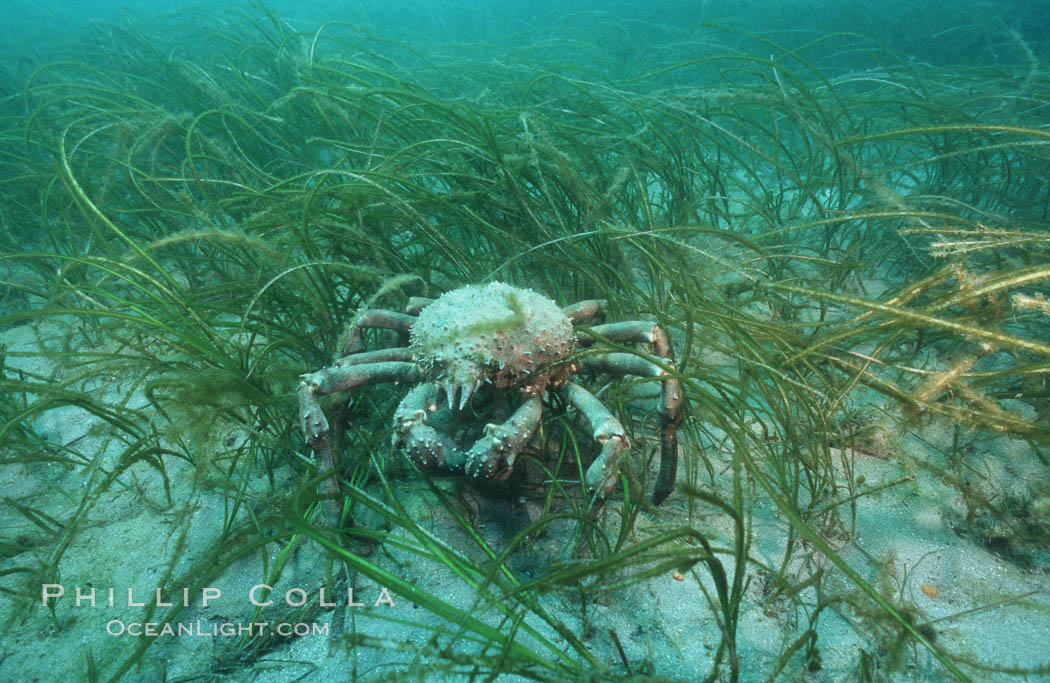
Scuttling across the floors of silent seas.


If I "dare disturb the universe" for a moment and rewrite T. S Eliot, the sentence becomes:

Image courtesy of Phillip Colla and OceanLight

I should have been a pair of ragged claws
That scuttles across the floors of silent seas.
Again, NO. "Scuttling" is so much more evocative; I can hear the clicks of the crab as it scurries along under unimaginable ocean depths. 

As with cooking, authors can use adverbs and present participles as spice and seasoning. However, too much curry will certainly ruin the soup. Not enough, and the meal is bland.

The problem and glory lies in finding the balance.

Friday, February 1, 2013

Energy and the Law of Balance

There is a lot going on inside her head. She creates worlds and landscapes, complete with maps filled with mountains, rivers, and valleys. Little people appear there and she breathes life into them, giving them words and faces until they take over the job and begin to act on their own. And she sits back, breathless, and watches as her new planet comes to life, a place as real as a truckstop on I-95.

From the outside it appears that she is quiet. A girl whose dreams don't show in her eyes, do others wonder what she is thinking? Or is she passed by, not noticed as she lives two lives - one in the present world, one in her own mind?
Art by Irving Amen.
You can see more of his work here.

She spends the mornings typing frantically, as the characters and their adventures wrestle their way out of her fingers and bloom on the page. At that point, as she paints her thoughts she is lost. A phone rings and she hears it, dimly, as if it were ringing in another house.

When she emerges, she is exhausted. That journey to her world and back again is tiring - her brain has been firing on all cylinders, and she is left, for a while, empty.

She wonders if this act of creation is a sort of insanity, a sort of vampire that sucks part of her. But she knows she cannot give it up.

As this girl, the swimmer in the stream between two lives, negotiates two paths at once, she searches for a balance - a way to keep something for herself, to survive in the real world while she creates her own. It is a constant struggle, that juggling act - to interact with real flesh, the friends and family that she loves, and to return to the paper skin of characters that she also loves, perhaps almost as much.

She is tired. She is dreamy. She wouldn't have it any other way.

Wednesday, September 5, 2012

Psst... Pass it Down

Sending notes in homeroom.... with the advent of texting, has that disappeared? Boo, hiss, if it has. 

I know I shouldn't encourage that illegal activity, but writing notes - and better yet! - receiving notes in school was a lot of fun. There was an art form to it. You folded the paper up a certain way, so only your friend knew how to unfold it. You sprinkled your handwriting with hearts and flowers and kisses, as well as drawings and CAPITAL LETTERS.

Forget LOL and SMH - mere wannabes compared to our acronyms. My friends and I had entire sentences that we spelled out - GWJILAY (Guess What, Jason Is Looking At You) and WOHCSB (Watch Out, Here Comes Stinky Breath.)

We experimented with different types of handwriting. I got pretty good at backwards writing - you had to read it in a mirror. We had special codes, and code names. 

But the apex, the very pinnacle of notewriting was achieved by a girl called Mary in sixth grade. She was really cool. She wanted to be a writer, and I used to send her notes about how awesome her stories were.

ONe day she came into school bearing a huge sheaf of paper. She plopped it on my desk and said, "Here, I answered all your notes." 

She had invented a new genre: the Book Note. It was at least seven pages long, and it included pictures she had cut out of magazines, long stories she had written, lyrics of some songs, a few articles from Teen Beat - she even taped on some Hershey's Kisses as a snack in case I got hungry while I read.

I lost touch with her, but I still remember the glory of that Book Note. And I hope she did go on to become a writer.

Saturday, August 18, 2012

Hootsuite and Tweetdeck - Those Damn Birds

Yesterday I read a post from a publishing blogger that I really admire. In her blog, she talked about how tired she was of reading a stream of spam, especially in a place she had created on Twitter for writers to meet and greet and help each other.

She really was upset about tweets sent via TweetDeck and Hootsuite. If you don't know these apps, these are services that let you schedule tweets in advance, for weeks at a time, to go out over the waves.

Writers, myself included, are guilty of sending out loads of prepackaged tweets, hoping to garner new readers with our perfects composed tweets.

Now, this blogger, who I completely admire, said that doing this is like stating, "I am going to send you content, but I don't care what your response is. Because I am not here at this time; a bot is sending out my tweets."

And she's right. If you hop on Twitter, there are tweets after tweets that are nothing by links to where to buy a book.

Does that mean, though, that Tweetdeck is completely useless?

For one thing, the service can help me read my tweets. I can sort incoming messages by subjects I'm interested in (books, publishing, parenthood, steampunk) so I can read what people have to say. 

But I also believe that there is a way to schedule tweets and do so without losing our personalities in the process.

Don't hate me just yet - read on.

First, I schedule tweets for readers who are in different time zones than I am. My tweet to someone in Australia might not get picked up if I send it now, but if I schedule it for 2AM there's a better chance they'll see it. 

Heck, I can contact regular people this way too. They say the best time to send stuff is from 10 pm - 11 pm. Guess what? I'm hormonal - I'm asleep by then. I need to schedule.

HOWEVER, my blogger mentor / muse is right. If I simply schedule spam for those times, then I am guilty of being a bot. 
Don't be that guy.

I think that as I schedule posts, I need to include humanity. Instead of a mere link to my book, I need to have a question or a quote - something that includes my Twitter followers and starts a conversation.

And guess what? If they answer my question, I NEED TO RESPOND.  I must do this to prove that I'm not a bot, to make a friend, to be human, for crying out loud.

As well, I must go and read the main stream on Twitter. I've had a lot of people tell me that they have too many Twitter followers to look at the stream. They only look at the interactions page (tweets specifically directed to them.)

I was doing this for a while too, and while I did so, my head jammed in my inbox, my spammy pigheaded bot self send out tweets to the general public with book links. (Confession is good for the soul.)

Well, if we all did this, no one would read our tweets. We'd all be sending out links and checking our own mail, not heeding what other people were saying to the Twitterverse.

So I decided to jump back into the main stream. Now, I read general tweets again. I laugh at some, retweet others, and guess what? There are some tweets out there from writers that make me buy books.

This said, there are those (such as my wonderful publishing mentor) who have specifically requested not to receive book links on their group hashtags. I must, as a human and not a bot, honor that request and only send out links to those who actually want to see them.

My tweets in the past have garnered me readers. I've had responses of, "Thanks so much for telling me about your book! I'm reading it now."

Still, as I said before, my muse has a great point. I must shed the bot and up my humanity game, if I want to hoot my deck, that is.

Thursday, July 5, 2012

The Quiet Girl

She doesn't attract a lot of attention. Her friends are funny and get loads of laughs. People don't notice the one in the corner, at the end of the table.


She goes to college. Others win awards for brilliance and attract huge crowds of friends. She goes out, is social, but somehow she fades into the background.


Through junior and senior year, into real life where she gets a job, she wishes that she was more vibrant, more alive. That she could tell a story or a joke and make the whole room listen. That when she walked into a party, everyone would stop and look and be happy that she arrived. But when she speaks, somehow people don't hear her soft voice.


People like her, but they say that she is "very quiet." And so she is. She discovers that it is best if she holds back, is the audience, allows others to have center stage.


And as life continues, the quiet girl keeps observing. It's second nature to her to watch a conversation on a train between a pair of lovers. To see a family have a squabble after church. She sees how two people have a long chat at a party, but she also sees how the talk is filled with undertones and hidden meanings. 


She sees how one gesture can convey an entire range of emotions. How one sentence can destroy a mood. And how very often people say too much when they don't intend to.


The quiet girl writes stories. The conversations and interactions she watched her entire life now flow onto the page. She is able to create characters that live and breathe because she has been an observer for so long. 


She begins to suspect that her silence, her ability to blend into the background, is something else. She has an extra layer of protective coloring that allows her to watch what happens. And since she is so nondescript, no one realizes that she is there.


Perhaps, after all, this silence is a gift.

Thursday, June 21, 2012

Word Bricks and Backstories

Backstory - Part One


One thing editors and reviewers love to pounce on is "back story," that section in a book that explains how things came to be that way, or why a character is where she is. "Backstory!" we shout gleefully, as we wave a manuscript under the poor, bewildered writer's nose. "Must get rid of that backstory!"


However, books do need a certain amount of explanation. Readers like to know the wheres and whys, but they don't like to read a long, text-heavy lecture that explains them. 


For example, let's say you (the reader) have just picked up a book about Rose. I (the writer) want to make you understand what Rose is all about. So I include a few paragraphs filled with many, many uses of the past participle. Bored already just reading the words past participle, aren't you, you poor reader you.


Traditional Backstory:


Rose had decided to rebuild her life after her divorce. Her first husband had left her and their children penniless, and he refused to pay child support. Whenever she had made formal requests for payment, he had tracked her down and threatened her. She remembered how he had hit her, and as he left, he had told her that the children were next.


Now, this is pretty interesting action, but it is presented in a really dry, dusty way. Several more paragraphs of this and the reader will skim forward.


More than that, if they are looking at your Kindle or Nook sample online, they might decide to move their business elsewhere.


I am convinced that backstory is necessary, and that there is a creative, vibrant way to express it. In other words, writers can excite and inform at the same time. 


Let's try a rewrite of that paragraph, but in a completely different way.


New, Improved Backstory:


Rose sat by the window. She crossed her arms and winced. The bruise was still fresh from David's last visit. 


"Mum? Can I have my allowance?" Maeve entered the room. There was a rip on the knee of the girl's jeans.


"I'm sorry, love. I just can't afford it at the present."


It hurt to admit that, but the thought of what David would to do to her and, worse, to Maeve, if he returned was more painful.


Now the writer does several things at once. She makes the reader understand Rose's desperation, and she creates a magic picture of where Rose is, what her child is like, and where they are physically. The rewrite won't win any awards, but it's much more interesting than that first word brick.


Advanced Backstory - The Second Book in a Series


As an author of a series, it's even more imperative to get information about my characters out there. Someone may pick up my second book without having read the first. I could include a long "The Story Thus Far" section, but who ever reads those?


It would be better to bring the reader onboard with a few letters, a conversation, perhaps a cat walking among a pile of photographs. That requires much more dexterity but delivers far more interest.


Don't hate on the backstory. Seize it as a chance to serve up a fascinating chunk of detail about your beloved characters to those who make your writing possible: the readers.