Showing posts with label Star Trek. Show all posts

Monday, February 11, 2013

Saying Grimly

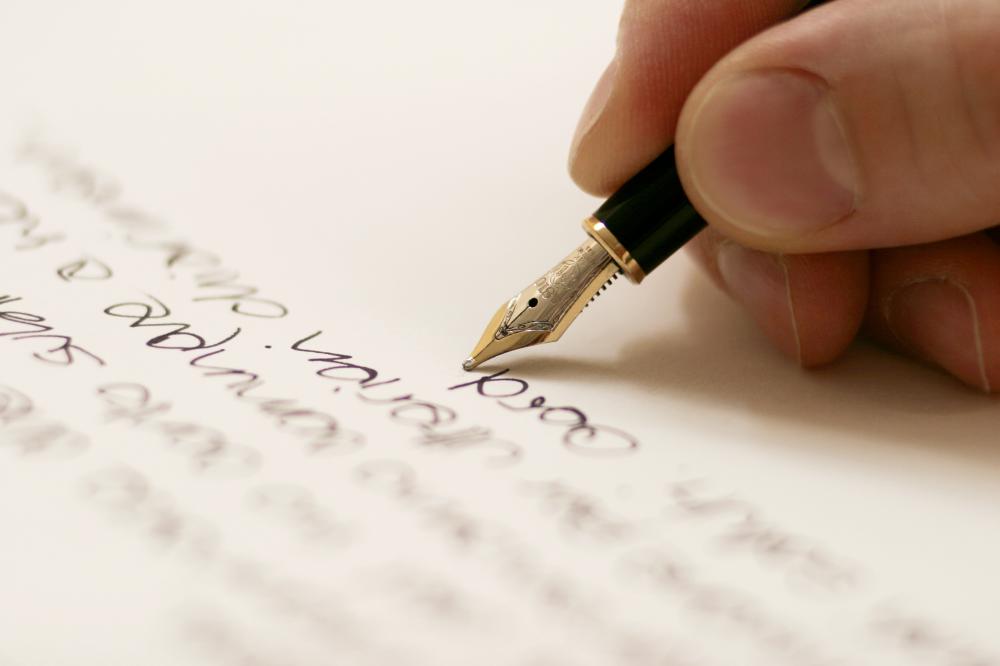
Image courtesy of Wisegeek
Do not use -ly adverbs! This is howled from editors' desks and reviewers' blogs. And they are right - too many adverbs in a manuscript sinks it to a hackneyed, overdone, immature level - although this is true of anything (more on that later.)

But should the writer purge every single -ly from the page? Adverbs, if used judiciously, are a lot of fun. 

See what I did there? Sure, I could have written: "Adverbs, if used in small amounts by a writer who is taking care with her script, are a lot of fun." Yeah, that's a lot of convolution to get rid of one word.

And I like the word judiciously. It calls to mind an author being a judge of her words

Furthermore, I like other adverbs too, and not just of the -ly variety:

"Nobody under the bed; nobody in the closet; nobody in his dressing-gown, which was hanging up in a suspicious attitude against the wall." - Dickens

The gloom and mystery of a Victorian house.


I always loved this sentence; it seems to project the gloomy, Victorian atmosphere of Ebeneezer's house as he prepared to go to bed by the light of one candle. In a  suspicious attitude describes perfectly the heart-jolting moment when you think you see someone in a room where no one should be, only to discover it is your coat or, in this case, a dressing gown.


If we removed that adverbial phrase, the sentence is: 
"Nobody under the bed; nobody in the closet; nobody in his dressing-gown." 

No. It has now lost that dark, dreary punch of the original.

Let's try some pop culture now, and examine one of my favorite voice-overs: 

"Space: the final frontier. These are the voyages of the starship Enterprise. Its five-year mission: to explore strange new worlds, to seek out new life and new civilizations, to boldly go where no man has gone before."

The last clause not only uses an -ly adverb, the infinitive has been split as well. Let's try it without the dreaded -ly word: 

"...to go where no man has gone before."

Nope. That loses the tone of the show, highlighting a brave group of explorers looking for new class M planets and civilizations. I want that boldly back in the sentence. It's perfect.

(Mindworm alert: Who's humming that theme in their head now?)

Of course adverbs can be overused, and if they are they lose all punch. "Boldly" is the only adverb in that voiceover, and if they had put in more, it would have collapsed:

"...to bravely explore strange new worlds, to carefully seek out new life and new civilizations, to boldly go where no man has gone before."

This dude is THE MAN.

Welcome to hack-ville!

As with all rules, the -ly and adverb rule can be broken. But the writer must use care and precision as she commits adverb usage.

As I said in the first paragraph, this is true of anything. Another example is the present participle, or -ing verbs. They have fallen out of favor, and after two years of editing, I see why. 

Beginning writers lean on -ing to add imagery to a scene. It's an easy way to show what's going on, especially after a burst of dialogue:

"I don't care what you think!" he shouted, slamming down the phone.

"Will you come with me?" she asked, pushing back one stray curl of her hair.

Read ten of these on one page and you may, as I have seen other editors do, decree that the writer must purge all present participles from the manuscript. It's exhausting going through a MSS to work out 99% of those present participles; we editors would much rather concentrate on vocabulary choice and story arcs.

However, if an editor does lay down that decree, that it can lead to verbal gymnastics as a writer tries to evade the dreaded ING. If a writer takes two sentences where one would have done in order to avoid one verb tense, then for heaven's sake go and use an -ING, I say.

And, of course, the present participle is also used beautifully in literature, as in this line from The Love Song of J. Alfred Prufrock:

I should have been a pair of ragged claws
Scuttling across the floors of silent seas.


If I "dare disturb the universe" for a moment and rewrite T. S Eliot, the sentence becomes:

Image courtesy of Phillip Colla and OceanLight

I should have been a pair of ragged claws
That scuttles across the floors of silent seas.
Again, NO. "Scuttling" is so much more evocative; I can hear the clicks of the crab as it scurries along under unimaginable ocean depths. 

As with cooking, authors can use adverbs and present participles as spice and seasoning. However, too much curry will certainly ruin the soup. Not enough, and the meal is bland.

The problem and glory lies in finding the balance.

Thursday, December 13, 2012

Alternative Reality in TV and Film


Today's blog is a guest post from Ross Kitson, the author of the Darkness Rising series and a new steampunk book, The Infinity Bridge. (I've read all of his books, and they are fantastic.)

This is a continuation from his guest post from yesterday about books, posted on Life in the Realm of Fantasy. It will continue on Ross's own blog tomorrow and address alternative realities in comics here - http://rossmkitson.blogspot.co.uk

A central premise of my latest book, The Infinity Bridge, is the existence of parallel worlds and alternate reality. In the book these are classified as historical, physical and biological variants. The first is obvious, the second is an idea that a parallel world could, for example, have different physical laws—say magic exists (in a Narnia alternate world type way). The third is the idea that we could have evolved down a different path, or that perhaps dinosaurs became the dominant evolutionary species.
The possibilities are endless, and for a writer that holds a major appeal for me. I’ve been fascinated by the topic for as long as I can remember, and although I first found it in super-hero comics, it was in television that it really ingrained itself in me.
Although the idea of alternate realities and parallel worlds was well established in the pulp sci-fi of the forties and fifties I think the stage where it became soldered as a concept in our brains was when it slipped from the yellowed pages of literature and into the Technicolor glory of TV and Film.
I could go on about the Twilight Zone first of, but as I’m only just past 40 it’d be wrong of me to claim any real interest or memory of the show. Yeah, I know it was uber-cool, perhaps more so in retrospect, and it paved the way for so much... but I want to start with the two greatest sci-fi series on the box: Star Trek and Dr Who.
I am evil Kirk!!!!!
With due apology to my national loyalties, its really Star Trek that I remember as a kid for first showing me the alternate reality story line. It was a basic idea in Trek that anything was possible with an ion-storm and a dodgy transporter. In the seminal ‘Mirror, mirror’ our hero James T Kirk is flipped into a parallel world, along with Scotty, Uhura and McCoy. This alternate world had an evil version of the Enterprise crew, with agoniser booths and assassination attempts. And the evil Kirk is noticeable in our own reality by his dark eye make-up (there was another great one, The Enemy Within, where Kirk is split into bad Kirk and good Kirk by the transporter... that was a cracker too!!).
I loved that episode and, in the era of Star Trek syndication, watched it again and again on BBC2 when it repeated. Less repeated, but none the less a significant impact on my TV watching childhood, was Dr Who.
Dr Who had many alternate reality and parallel world stories. One that bore a significant resemblance to Mirror, mirror was the 3rd Doctor story ‘Inferno.’ Here a TARDIS malfunction sends Jon Pertwee’s doctor into a reality where the country is run as a fascist state (some would joke it’s not that alternate) and there are evil counterparts to his friends and companions. The idea re-surged again in the 7th Doctor’s story Battlefield, and more recently the 9th Doctor’s Rise of the Cybermen. One which derives from other TV and film concepts, was the Tenth Doctor story, Turn Left. The entire premise is based on the idea that if the Doctor’s companion, Donna, had made a different choice before she first met the Doctor, then what would be the ramifications on her world, the other companions etc. The writer Russel T Davies drew on themes from films such as It’s A Wonderful Life and Sliding Doors, that alternate realities that are created by individual decisions going two different ways, can have significant impacts on others.
It’s A Wonderful Life is a seminal Christmas movie, starring Jimmy Stewart, in which Stewart is visited by his guardian angel at a point where he considers suicide, and is shown the alternate reality in which he never existed and the impact that would have on his small town.
MCFLY!!!!!!
I’d seen the film on the TV a few times as a child, but for me the greatest alternate history style film was Back to the Future. It’s not strictly one, I know, but I adored that film as a kid. The first film gives us a clue what would happen to the present if Marty failed to get his parents together, and also what then happened when his dad stood up to Biff when he assaulted Lorraine. The alternate reality idea really got pushed in the second film of the series, which was a bit of a let-down for me, although still good fun. In this we see a dystopian present existing as a consequence of Biff’s meddling with time.
Dystopia is a popular theme in alternate history and parallel realities in the TV/Film genre. This is best exampled by Fringe, which started off as a sort of X-files style show and then went really whacky! I love Fringe, mainly because its lead characters are so awesome (especially Walter Bishop), but it went a little off-track in the fourth series.
Fringe tackles both parallel universes and alternate timelines. The premise of season 2’s finale onwards was that there was a parallel world with a few key historical and scientific differences that exists adjacent to ours, and that Walter learned how to cross and kidnap the counterpart of his deceased son (who had survived an illness in the other world). The ramifications for both worlds are huge, and in the parallel world result in widespread devastation and instability.
Your own Fringe Decoder, courtesy of Science Discovery
In the fourth season it got bonkers when Peter, Walter’s son, is thrown into an alternate history wherein he didn’t survive childhood and as a consequence history is different. The relationships between the two parallel worlds are altered, as are the characters.
The alternate reality in films and TV has progressed now from the staples of sci-fi into more mainstream and innovative series. I’m yet to watch it, but someone at work was raving about the series Awake. In this Jason Issac plays a cop who is involved in a car crash. In one reality his wife survives, in another his son. He flips between the two realities, which he distinguishes by wearing a coloured wristband, when he goes to sleep and wakes again. He uses information from one reality to help in the other when solving crime.
It’s a brave concept, although I think perhaps too radical as the series only made one season. It does illustrate that the idea of alternate reality and alternate history isn’t just in the SF realm, and that the alternates don’t have to played on a world-wide scale to make good drama. Rather the more interesting ones are when we look at the impacts of decisions on a character based level, and in their relationships and development.
So, finally, I go back to the media that first got me excited about alternate reality... the world of comics.